


Flights to Irkutsk
Irkutsk is the gateway to Baikal. Daily flights from Moscow, St Petersburg, Novosibirsk. From the airport to Listvyanka: 70 km by transfer.
Baikal is not just a lake. It's a place of power.
Best fares
Where to stay by Baikal
Eco-hotels and guesthouses by the water in Listvyanka. On Olkhon: Nikita's base. In February, book 2–3 months ahead.
Zones of Baikal
When to go to Baikal
Two peaks: February (ice) and July–August (swimming). September is quiet and beautiful.
Ready-made tours to Baikal
What you need to know before you go
Winter crampons
Take crampons (ice spikes) on the ice — 300 ₽/day rental. Sunglasses are essential because of glare. Ice below −15° may crack — this is normal.
Connectivity at Baikal
MegaFon is stable as far as Aktash. On Olkhon only in Khuzhir. Download Maps.me offline. For remote routes, a satellite tracker.
Transport
From Irkutsk to Listvyanka: bus №526, 70 min, 200 ₽. To Olkhon: ferry from Sakhyurta, 15 min. Hire local drivers for jeep tours.
Baikal cuisine
Omul, grayling, sagudai (marinated fish). Buuz are Buryat mutton dumplings. Listvyanka market sells fresh and smoked fish.
Must-try experiences
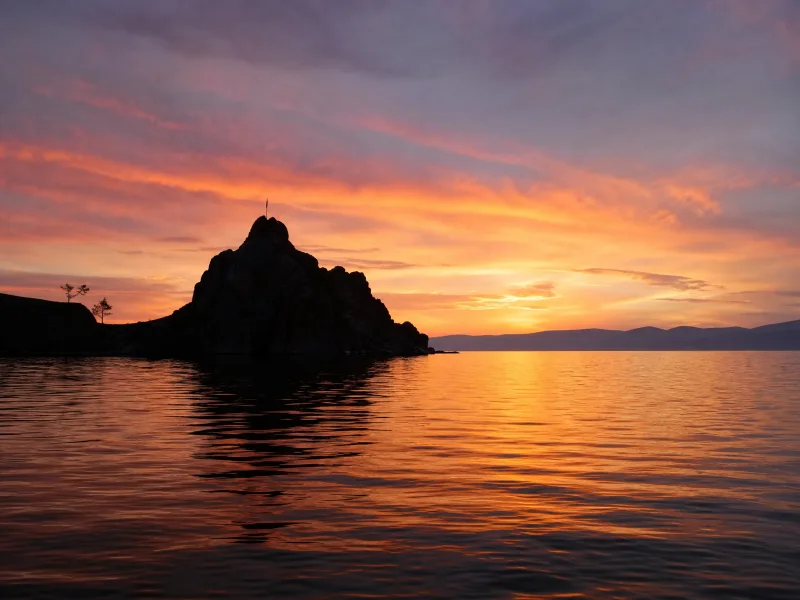
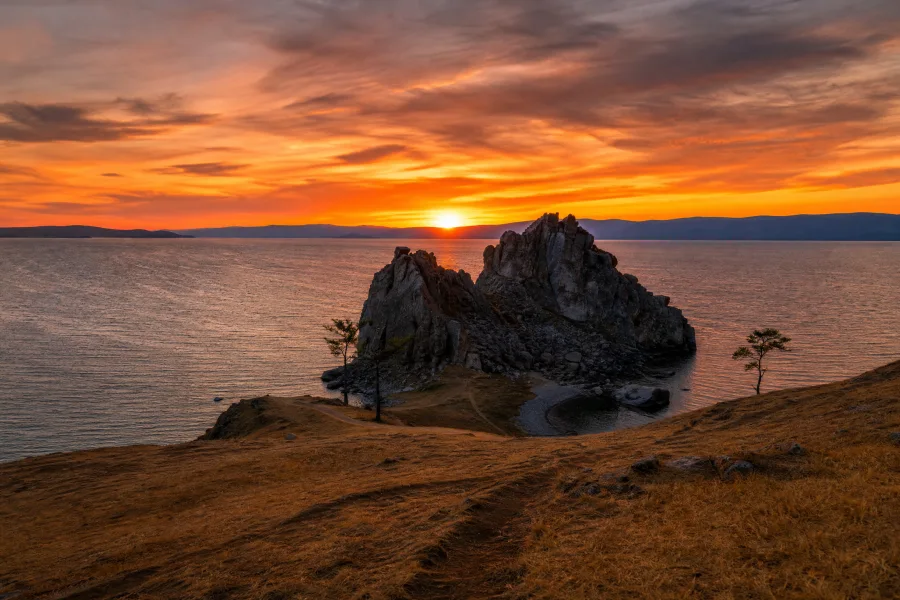
The most sacred place at Baikal. One of the 9 holy places of Asia. The sunset here is the best on the lake.
The twin-peaked rock near the village of Khuzhir stands right in the water. Buryats believe it is the dwelling of the spirit-master of Baikal — they come with offerings, tie ribbons to wooden serge posts. Approaching the base was forbidden for centuries. Best time: an hour before sunset: gold in the water, quiet, almost no one around.
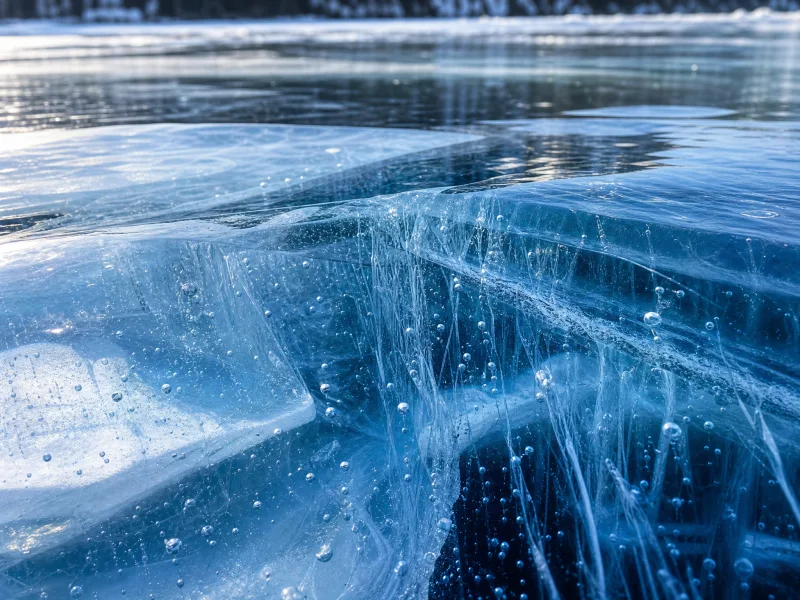
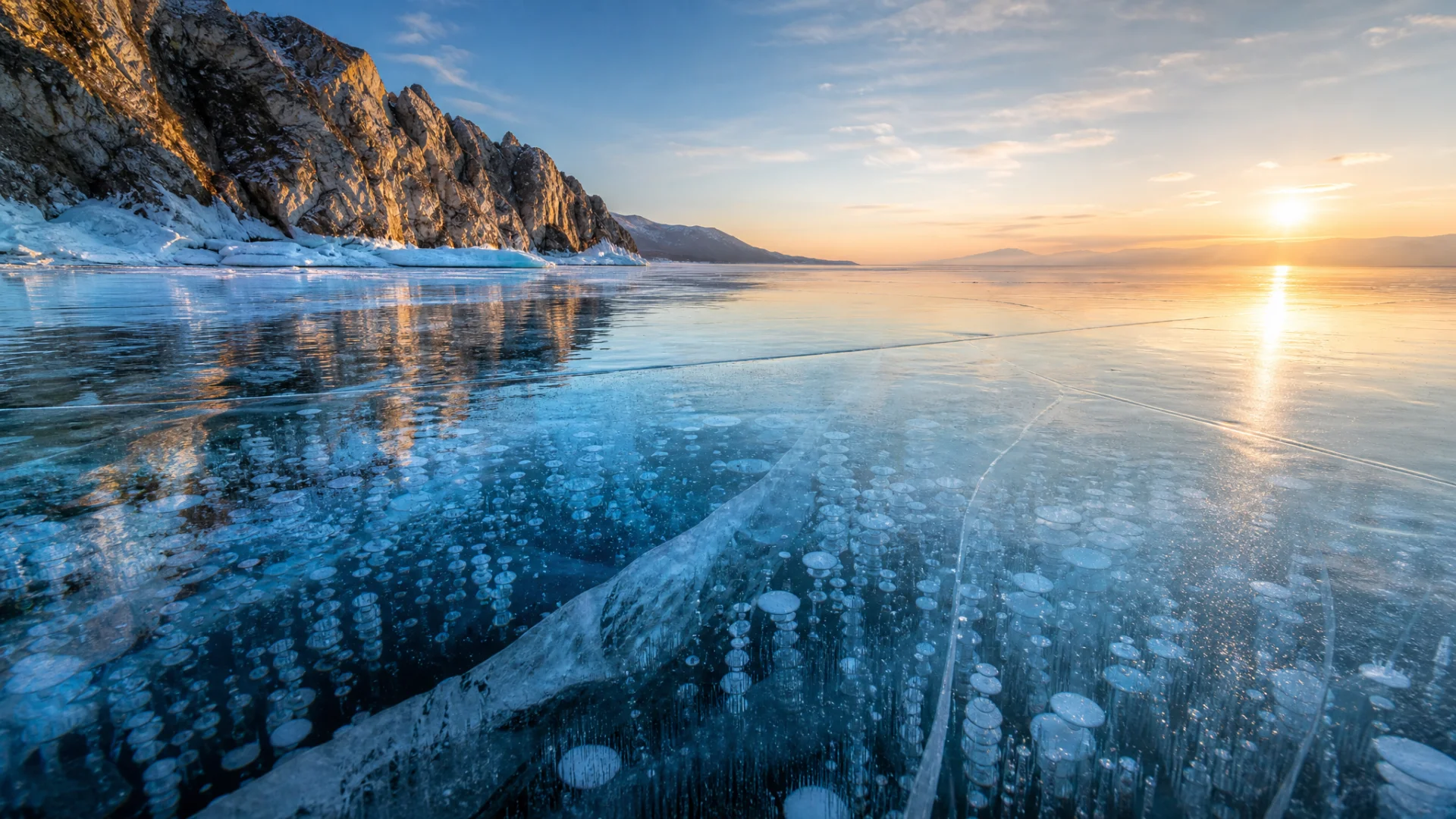
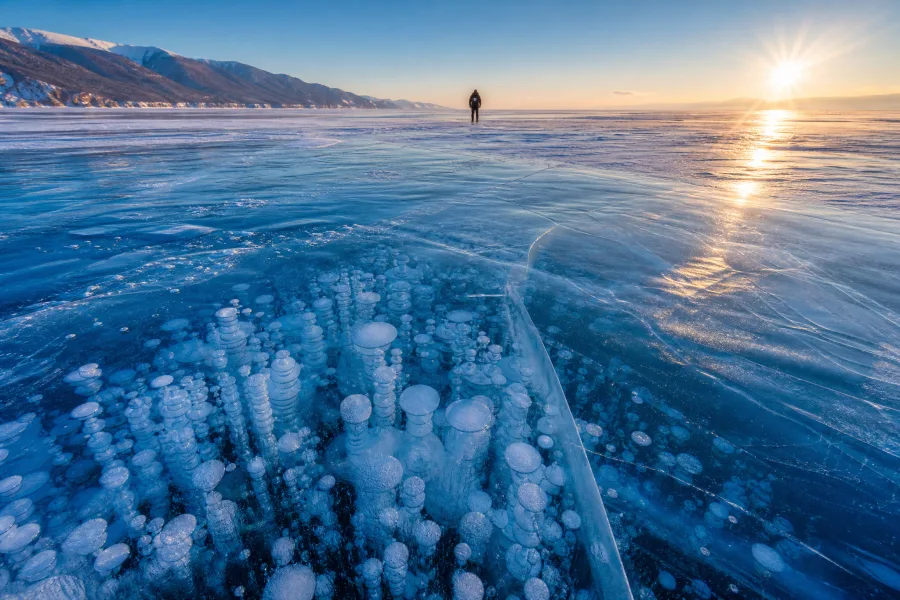
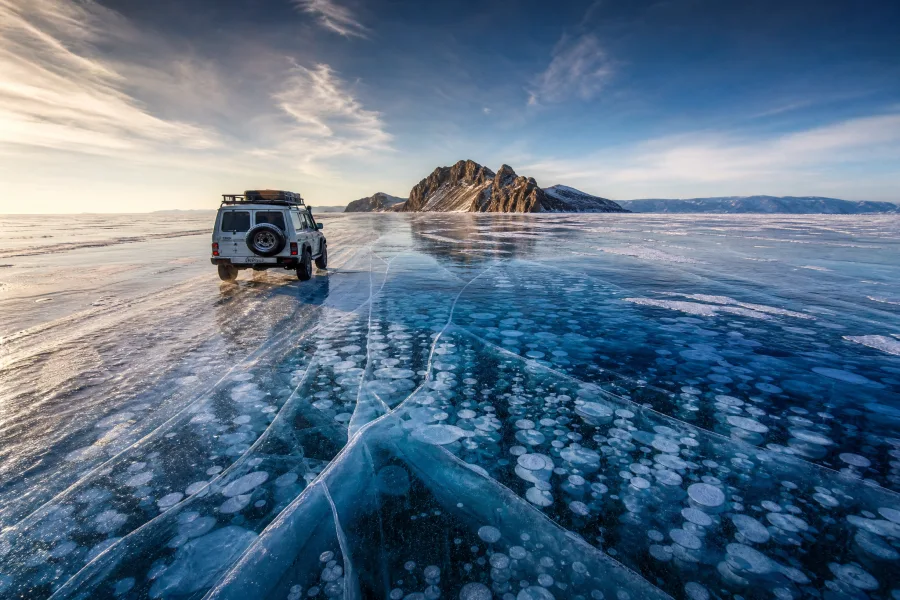
February–March: transparent ice with bubbles. Overnight in an ice camp is an unforgettable experience.
Baikal ice is one of the few in the world where you can see the bottom through 30–40 cm of crystal-clear ice. Methane bubbles, frozen at different depths, form stacks of white coins. Cracks boom like thunder. On a khivus — a hovercraft — you reach Olkhon Island in an hour. Season: late February to early April.
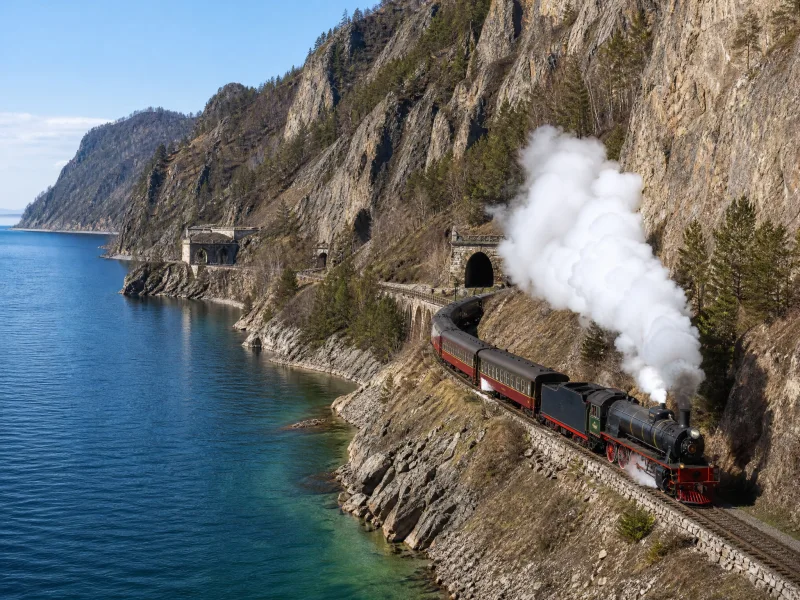
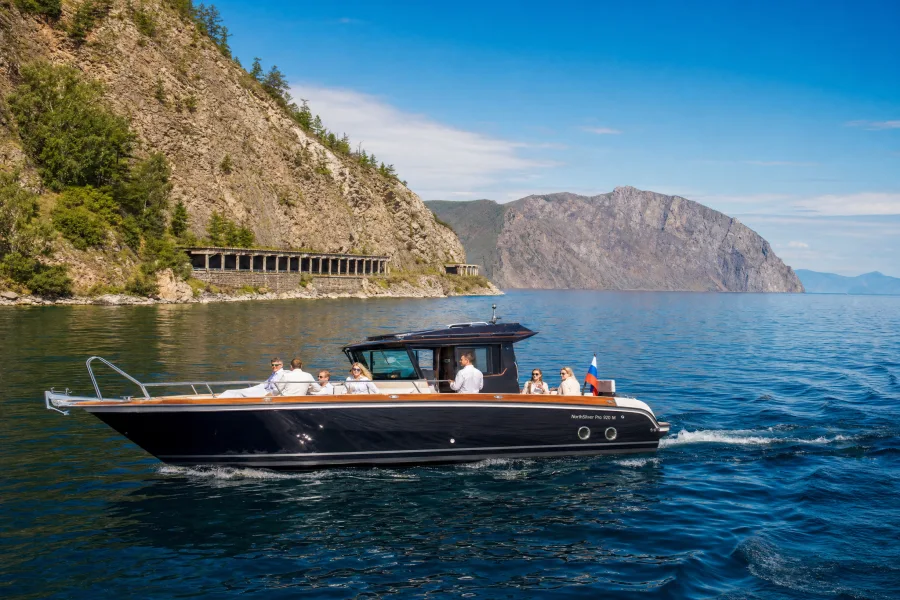
The Circum-Baikal Railway is a retro train from Slyudyanka. 84 km of tunnels and bridges along the water.
The Circum-Baikal Railway — called the 'golden buckle of the Trans-Siberian' — was laid along the shore in the early 20th century. 39 tunnels, 470 bridges and viaducts over 84 km. The retro train departs from Slyudyanka and runs all day along the water: cliffs hang over the carriage roof, the lake laps a metre from the track.
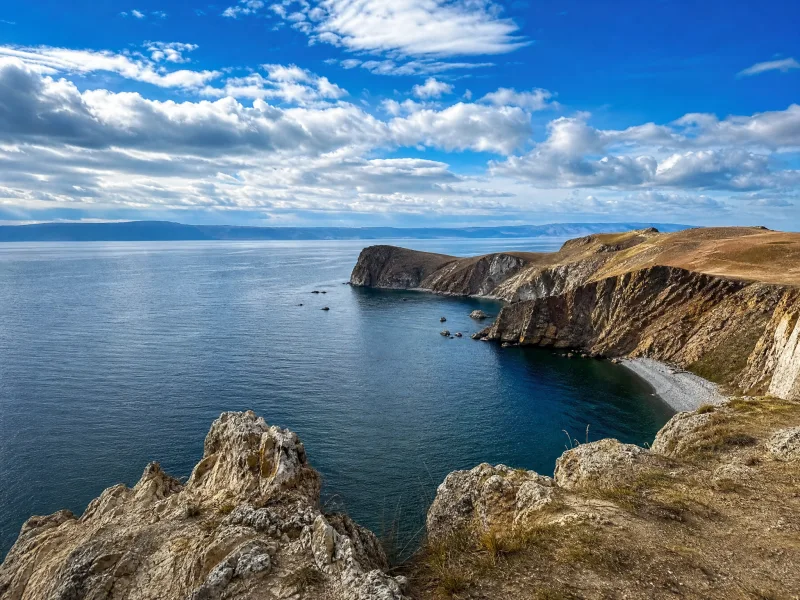
The northernmost point of Olkhon. Nerpa seals on the rocks, echoing cliffs. Reach by GAZ-66 — 3 hours.
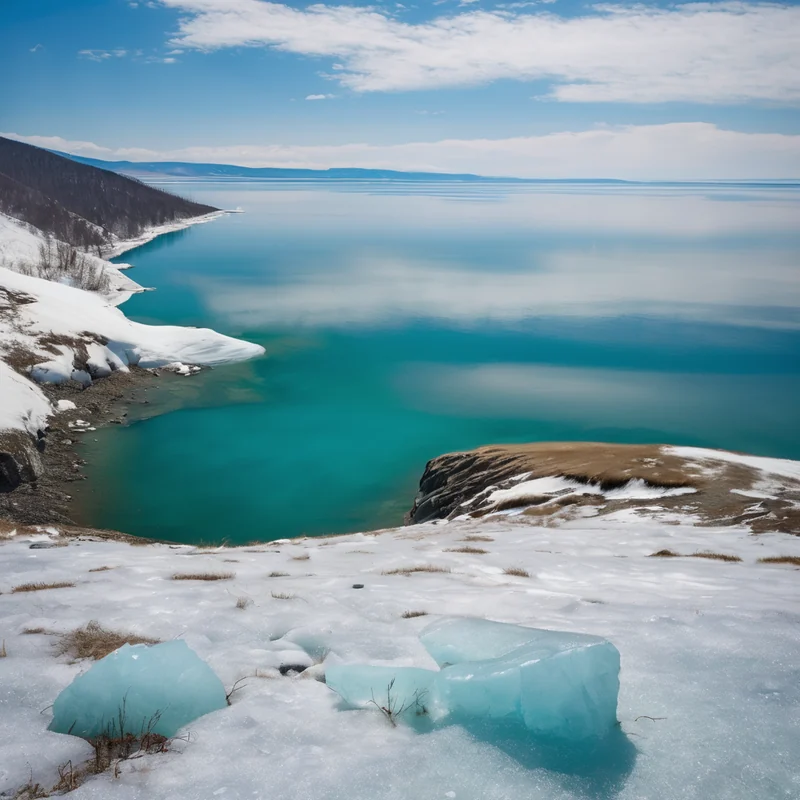
In Buryat, 'khoboy' means fang. The pointed rock juts into Baikal, surrounded by turquoise water at 360°. The only way to get there is by GAZ-66 or 'bukhanka' — three hours over steppe ruts past shamanic sites. Nerpa seals bask on coastal rocks, ignoring tourists. In winter Khoboy becomes the entrance to a grotto with sky-blue ice.
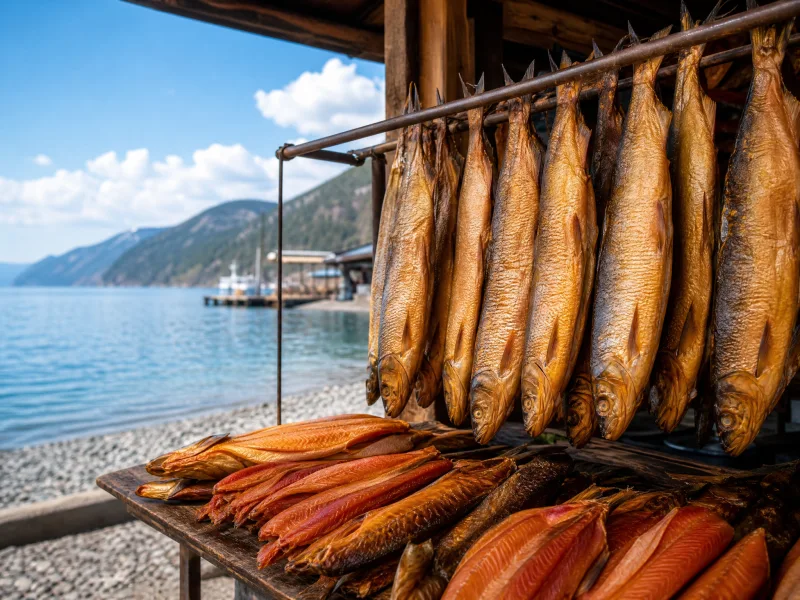
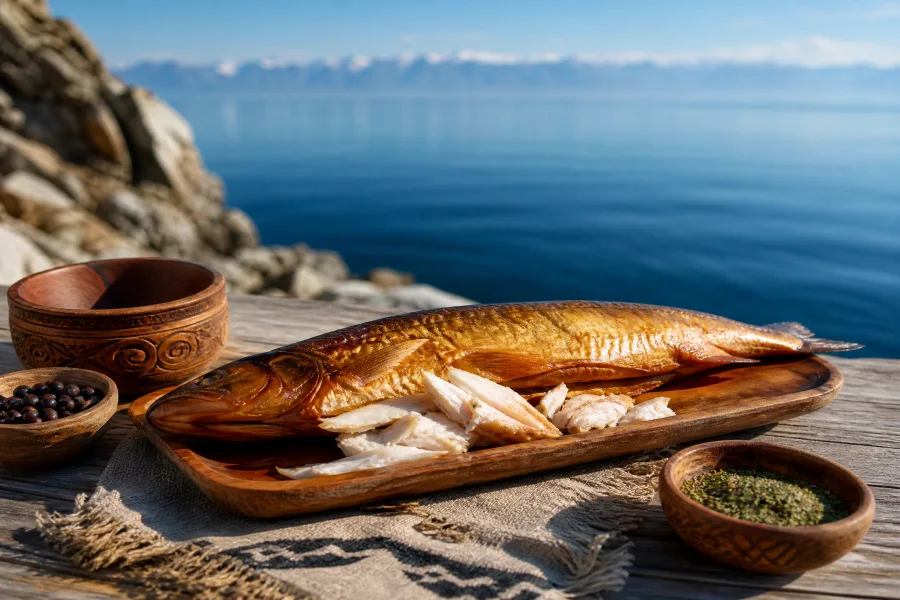
Listvyanka: hot and cold smoked fish by the water. Omul + local beer = a Baikal ritual.
Omul is endemic to Baikal, found nowhere else. The fish market in Listvyanka stands right by the pier: fisherwomen trade from wooden stalls, smokers smoulder. Get cold-smoked — the inside is tender, melts. You can open it right there, wash it down with local dark beer, gaze at the lake. This is the real Baikal.
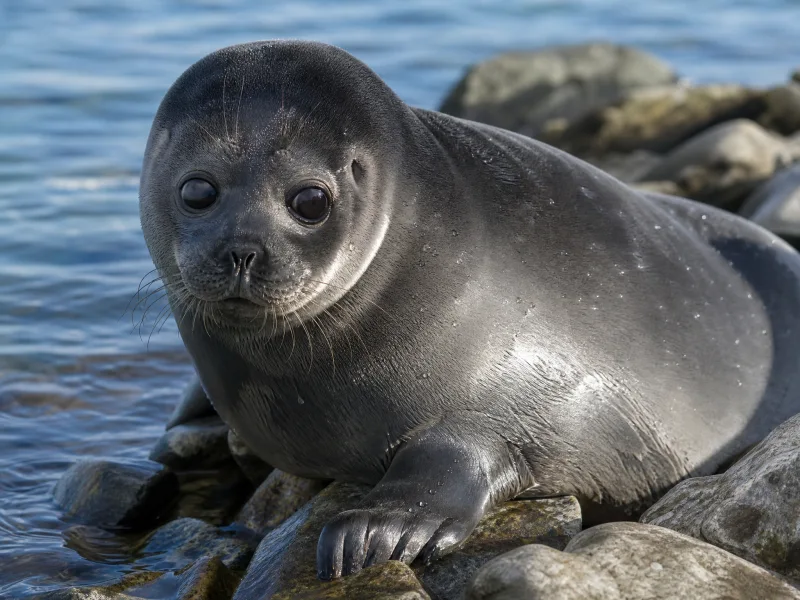
The Baikal nerpa is the only freshwater seal. Show in Listvyanka, photos and feeding.
The Baikal nerpa is a scientific mystery: the only freshwater seal in the world, living 3,000 km from the nearest sea. How it got here is still debated. At the Listvyanka nerpinarium you can watch a show, feed and photograph them. Wild nerpa seals often lie on rocks at the Ushkany Islands — special excursions go there.
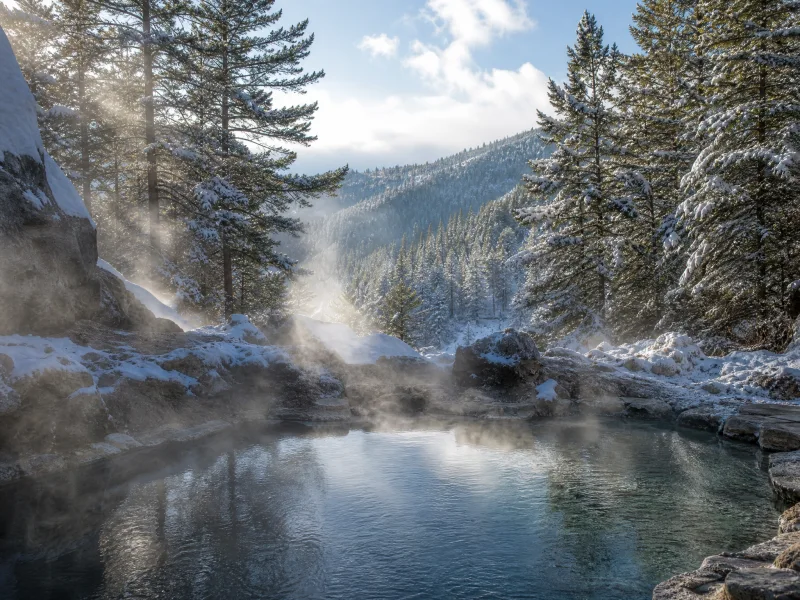
Hot springs at +42° on the shore of Northern Baikal. Reach by boat. True wild Siberia.
On the shore of Northern Baikal, where there is no road, thermal springs gush from the ground at +42°. You bathe in hot water gazing at the icy lake — sometimes in the same frame. You can only get there by boat from Severobaikalsk (4–6 hours) or by plane. There are no shops, cellular service or coach tourists. Only taiga, water and silence.
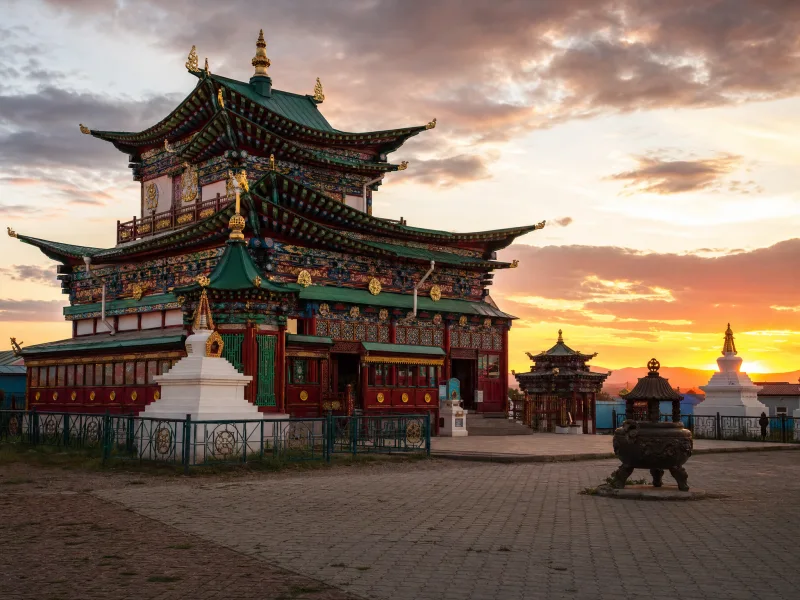
Russia's largest Buddhist monastery, 100 km away. The incorrupt body of Lama Itigelov from 1927.
30 km from Ulan-Ude — Russia's main Buddhist monastery. Seven temples with gilded roofs, 300 monks, prayer wheels and live cranes in the courtyard. The main mystery is Lama Dashi-Dorzho Itigelov. In 1927 he sat in the lotus position, announced his death and ordered to be exhumed after 75 years. The opened sarcophagus revealed an incorrupt body — scientists still cannot explain this phenomenon.
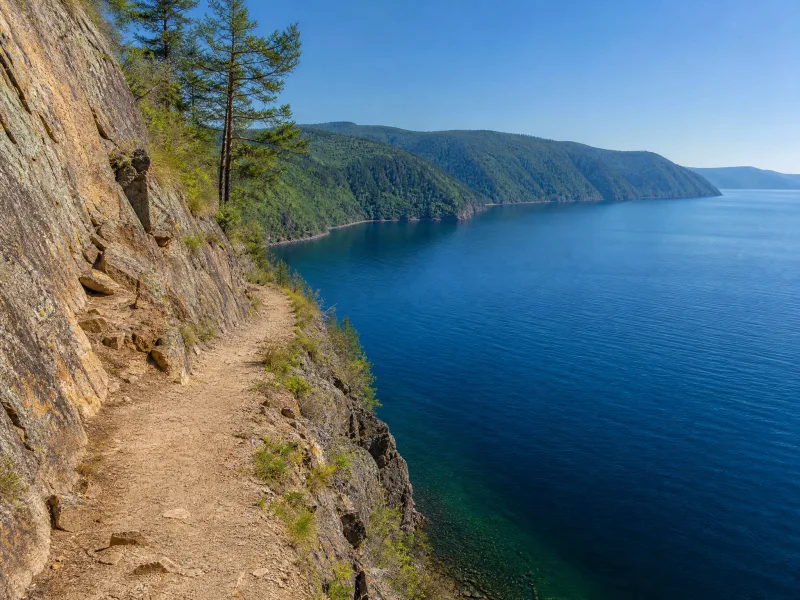
GBT — 650 km along the western shore. The Listvyanka–Bolshiye Koty section is 21 km. Overnight by the water.
A volunteer project, analogous to the Appalachian Trail — only along the world's deepest lake. 650 km of marked paths with campsites, springs and views found nowhere else. Popular start: Listvyanka to Bolshiye Koty — 21 km through cedar forest above a cliff, with an overnight stay in a wooden camp right by the water. In spring the trail is covered with Siberian flowers, in autumn with larch gold.